Invasive Plants

Invasive plants cause serious economic and environmental problems. They aggressively outcompete desirable vegetation which reduces range and crop productivity, recreational enjoyment and habitat value. Established infestations are difficult to control and often persist for many years, costing landowners time and money.
Invasive plant photo caption here
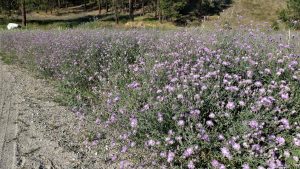
Spotted knapweed infestation

What is Biological Control?

Biological control (aka biocontrol) reunites invasive plants with their natural enemies, predominantly insects and plant diseases. The bioagents are host-specific and suppress invasive plant infestations to a more environmentally and economically acceptable level. Biocontrol will not eradicate infestations. It is most successful in areas with peripheral native plant communities that can re-claim the area once the invasive plants have been weakened by the bioagent.

Research performed before the release of these bioagents is extensive and includes testing of closely related native plants or plants of economic concern. New bioagents are only approved for release after determining their high host-specificity and lack of impact to other plant species of concern. Read more about the screening process here.
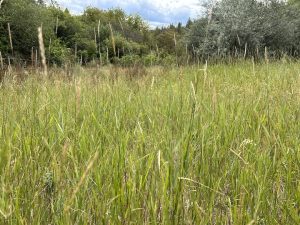
Invasive plant photo caption here
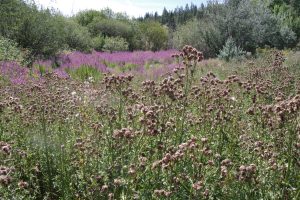
Before bioagent release (Canada thistle in foreground, purple loosestrife in background)
Invasive plant photo caption here
After bioagent release
How Does Biocontrol Reduce the Impact of Invasive Plants?
  • Weakens plants by destroying vital tissue
  • Reduces plants’ competitive ability
  • Decreases seed production


Successful biocontrol may be achieved with one agent. But generally, more than one agent is required, impacting different parts of the plant throughout its life cycle.
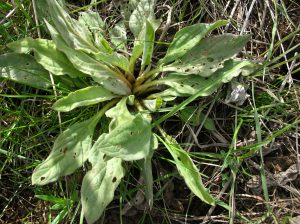
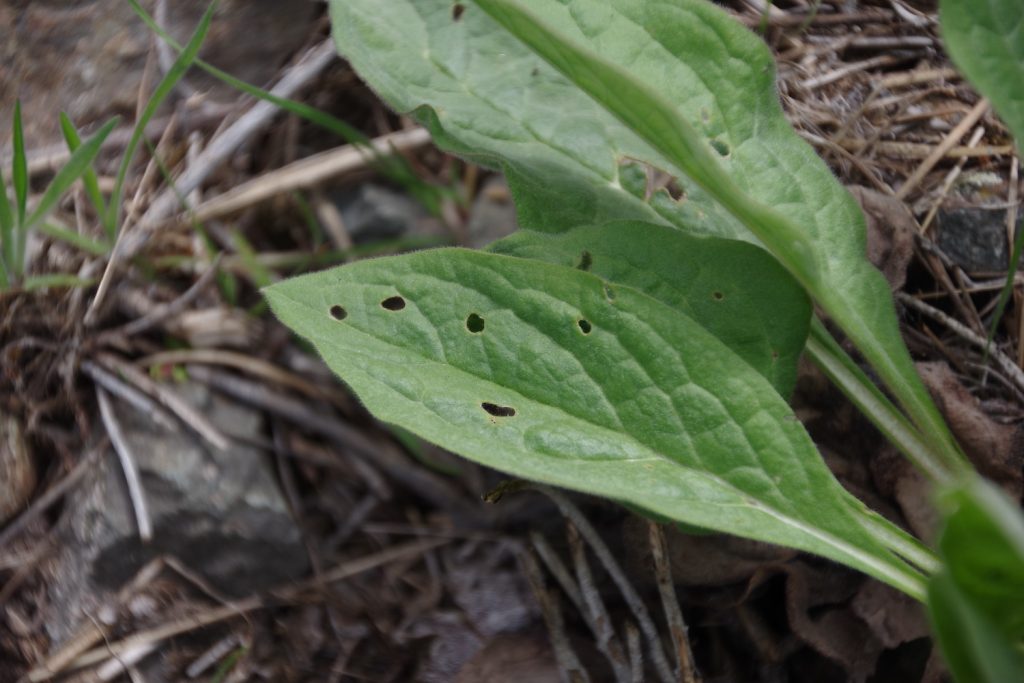
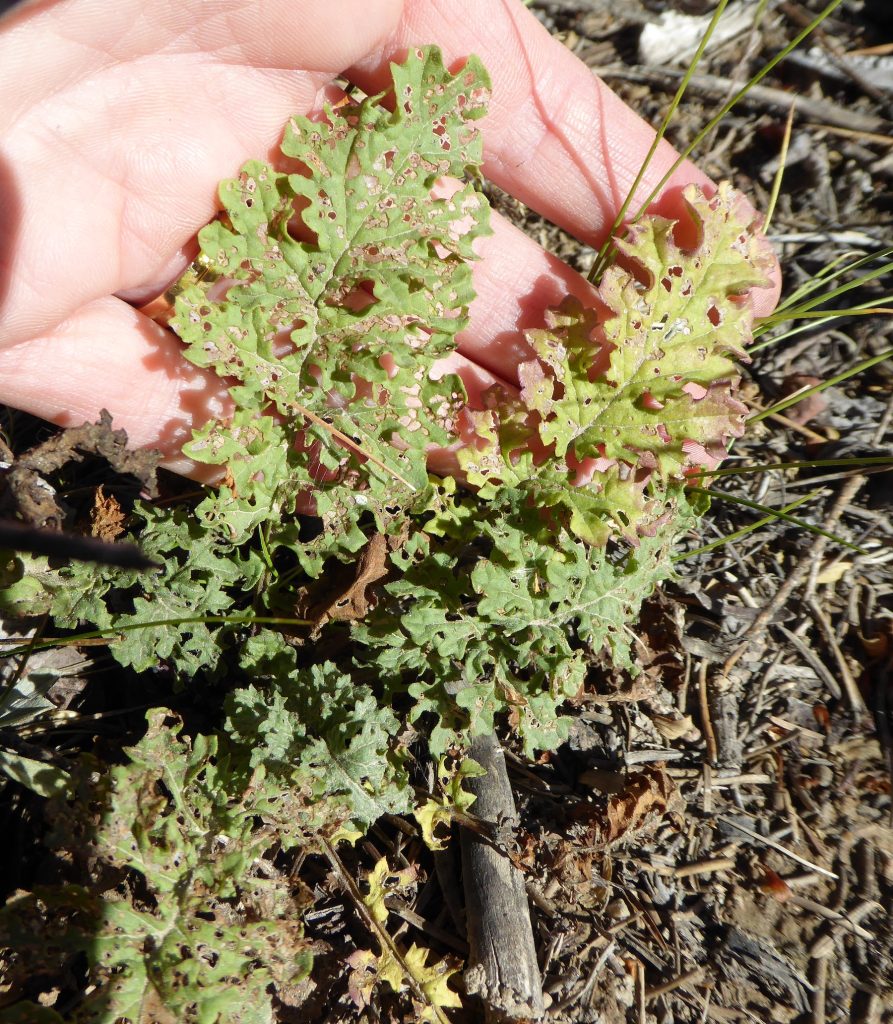
Feeding holes in hound’s-tongue leaves created by Mogulones crucifer beetle
Is Your Property Suitable for Biocontrol?


Bioagents may already be present on your property. Look for stunted growth and damage to the leaves, stems, seed heads or roots of invasive plants.

If there are no signs of bioagents, your property may be suitable for a release. The following criteria must be met:

  • Infestation size is over one acre
  • There will be no other methods used to control the infestation, including pulling, mowing or chemical application
  • There is no ongoing soil disturbance
  • You are prepared for long term monitoring with support
  • If the site meets release criteria, the landowner will work with OASISS staff and there is no cost
The Benefits
  • Once established, insects will reproduce and move around on their own without the need for human intervention
The Downsides
  • It can take a long time to notice a reduction in the infestation
  • It may not be effective
  • Bioagents are not available for every invasive plant species
Biocontrol is not an end point.
It is the starting point for shifting to an ecologically balanced, resilient plant community that relies on diverse, ongoing management.

Common Invasive Species with Bioagents in the Okanagan-Similkameen
Dalmatian Toadflax Learn more

Dalmatian Toadflax

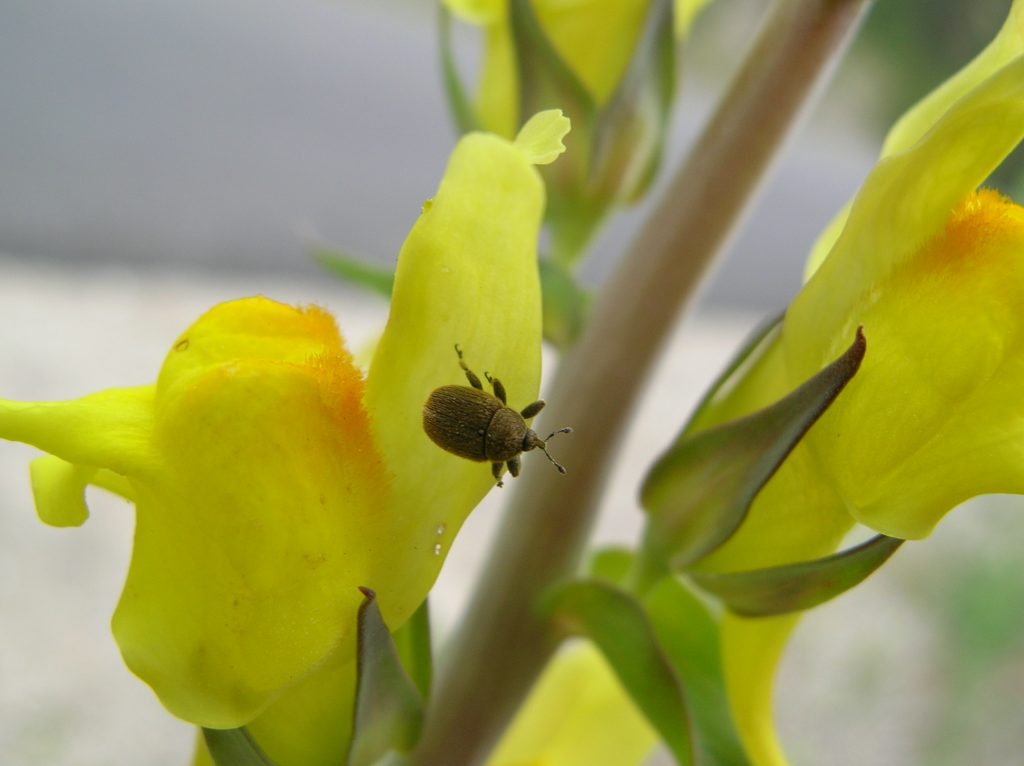
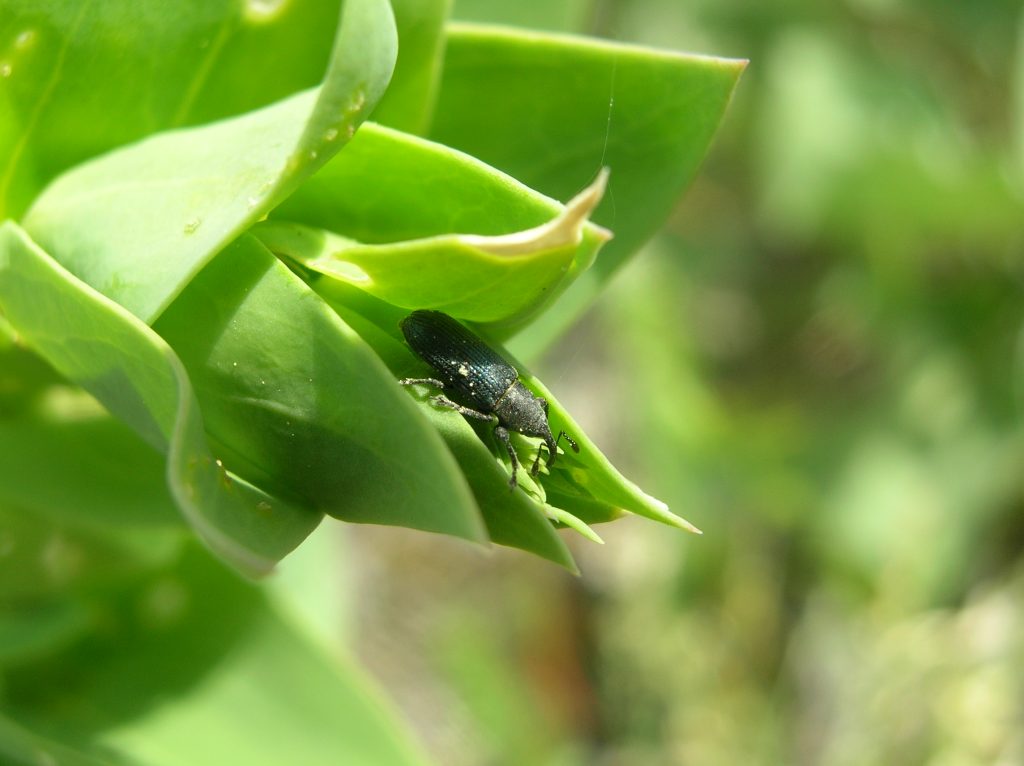
Mecinus janthiniformisMecinus janthiniformisMecinus janthiniformis
Bioagent: Mecinus janthiniformis

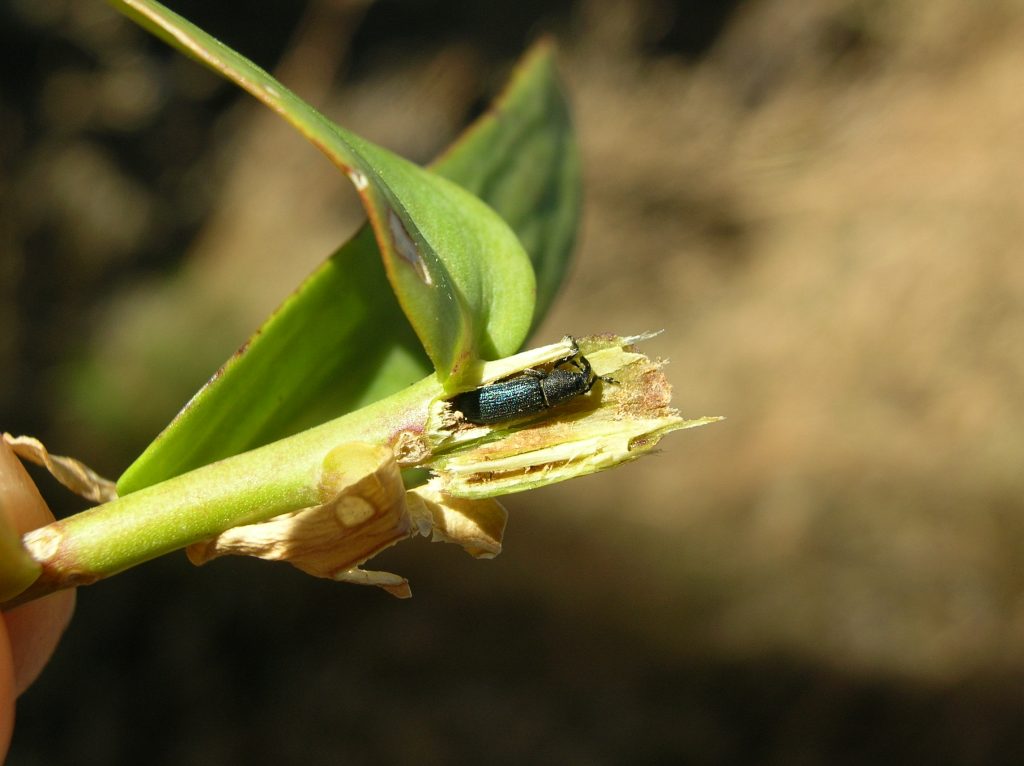
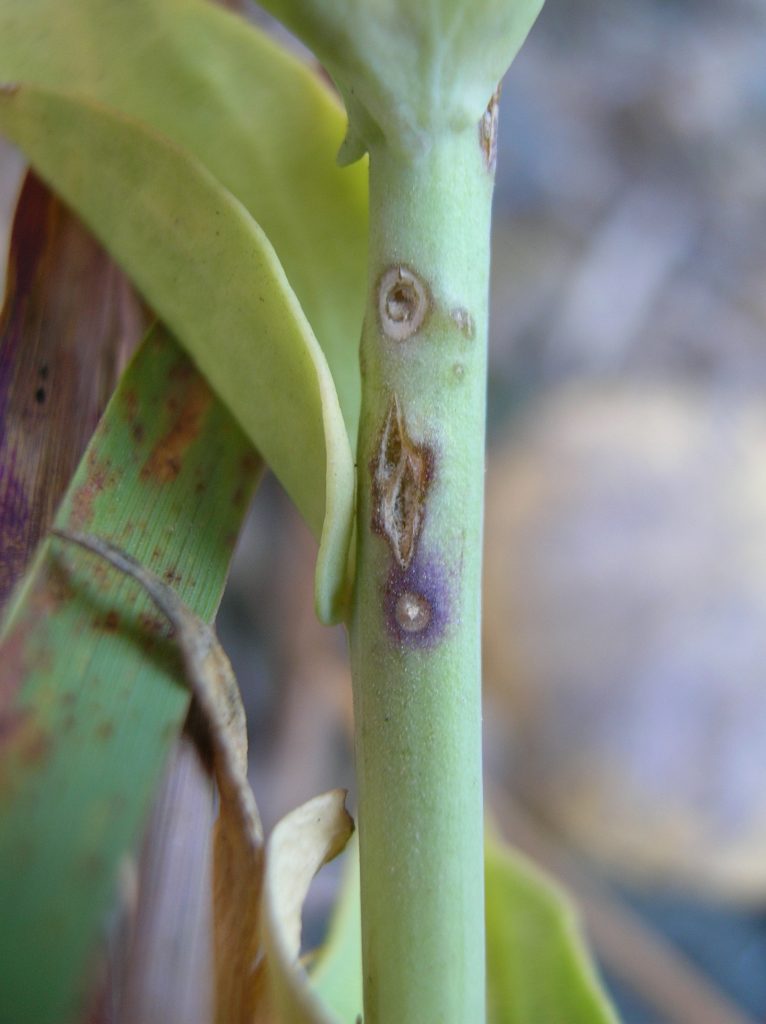
Black weevil. Adults chew distinct, small holes into the leaves, stems and growing tips. Females chew larger cavities into stems to deposit eggs. Larvae burrow and feed inside the plant stems.

Calophasia lunulaCalophasia lunula
Bioagent: Calophasia lunula

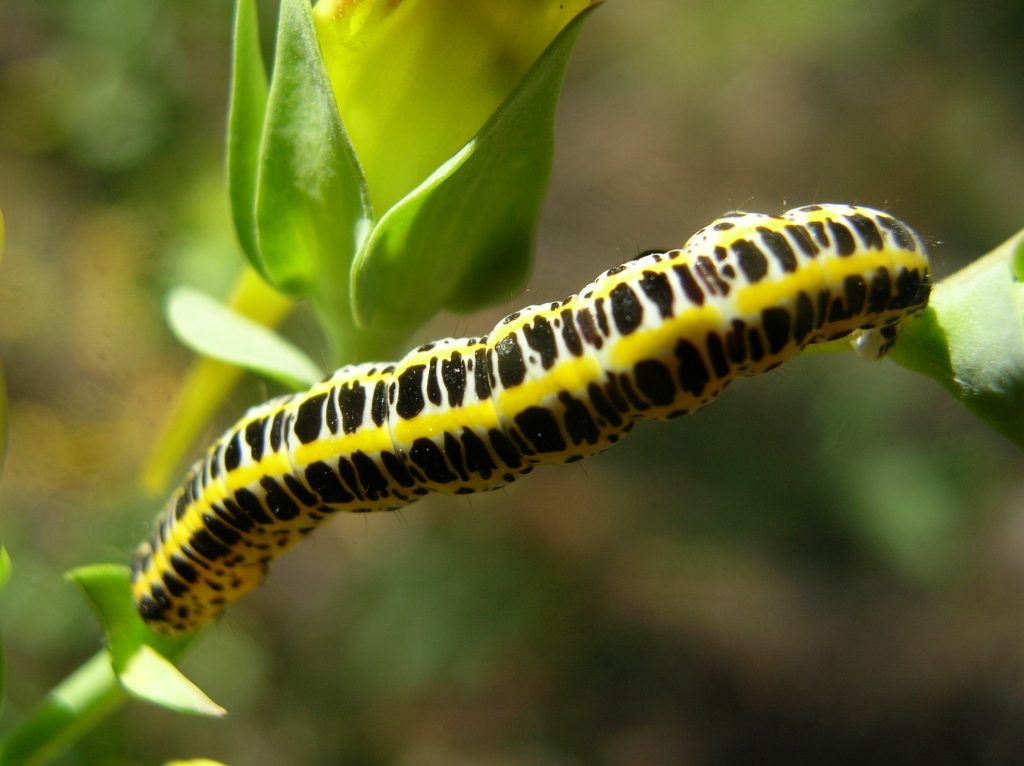
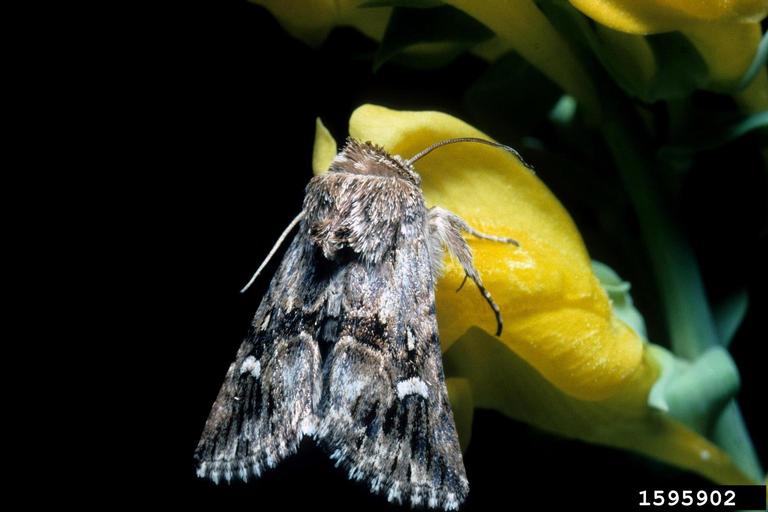
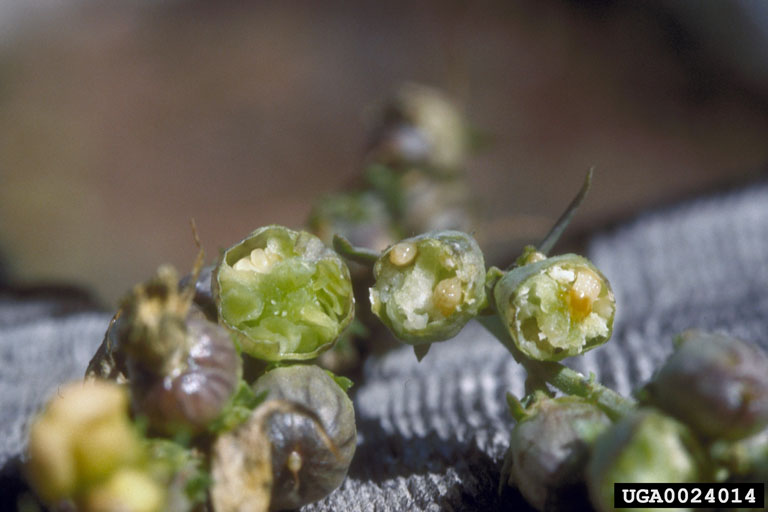
Light brown-grey moth with white flecks on wings. Adults feed on the flower nectar and lay their eggs on the flowers and leaves. Mature larvae are white or grey with yellow horizontal stripes and black spots. Larvae chew large chunks out of leaves, greatly reducing foliage, before constructing cocoons in the soil below for pupation. Right image credit: Laura Parsons, Unversity of Idaho, PSES, Bugwood.org

Rhinusa spp.Rhinusa spp.
Bioagent: Rhinusa spp.

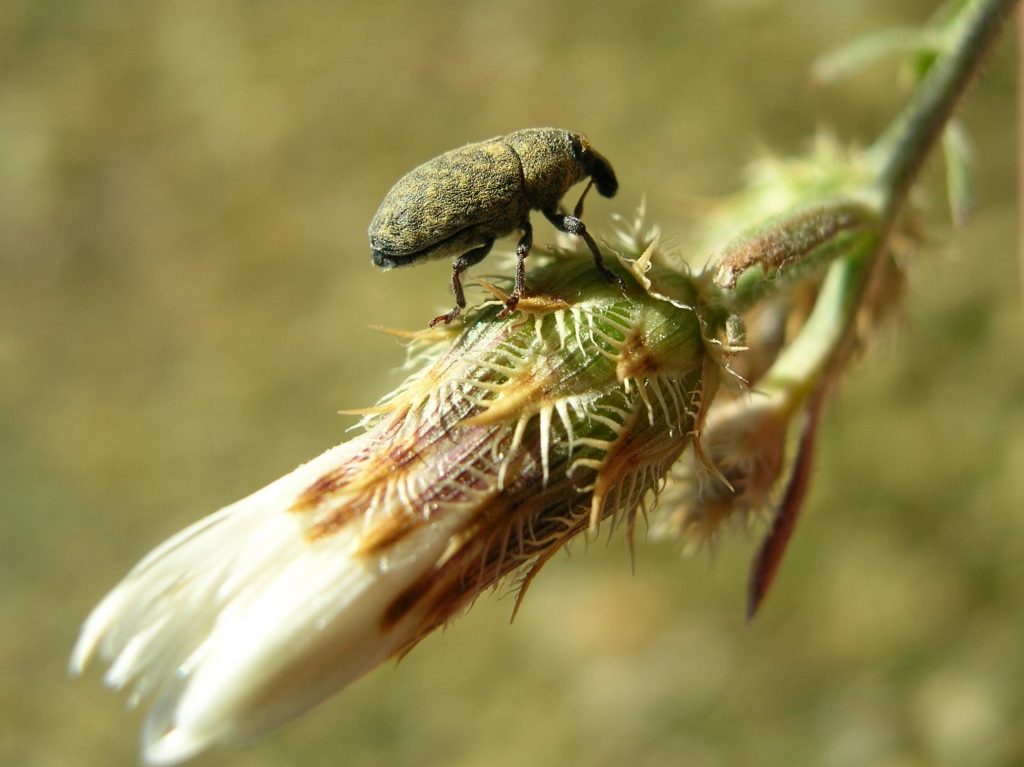
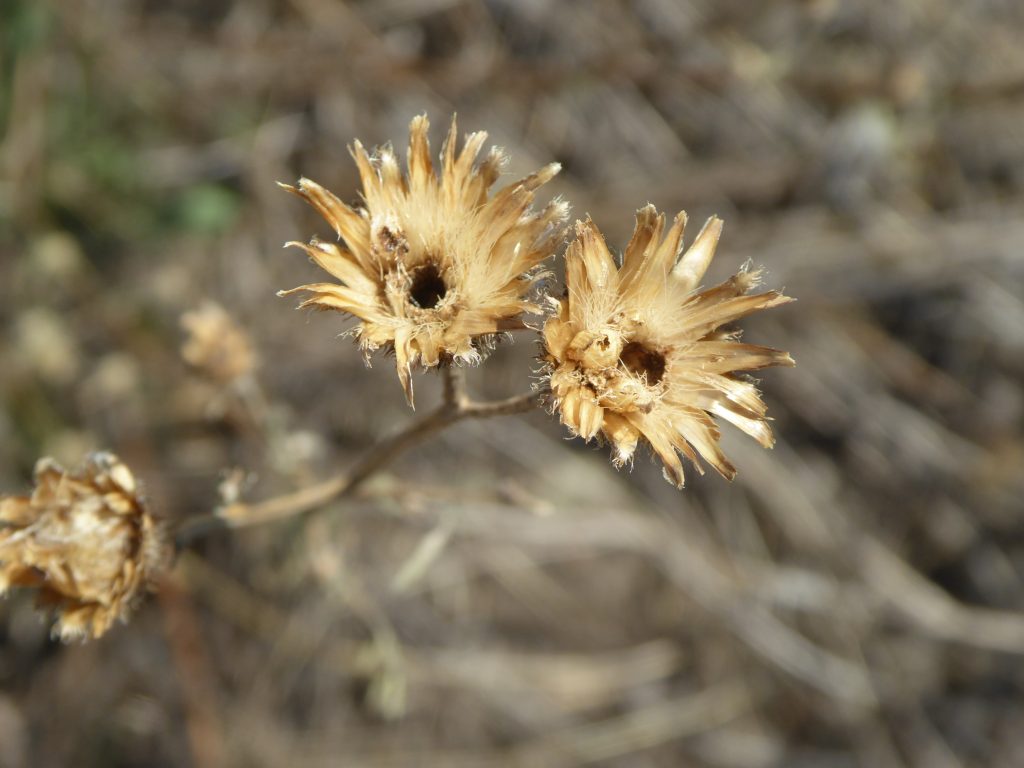
Grey to brown or black, oval-shaped weevil with a distinct long snout. Adults feed on new growth, causing branching lateral growth. They will later feed on pollen and young seeds. Larvae hatch in seed heads and feed on seeds. Right image credit: Eric Coombs, Oregon Department of Agriculture, Bugwood.org

Species Profile

Diffuse and Spotted Knapweed Learn more

Diffuse and Spotted Knapweed

Larinus minutusLarinus minutusLarinus minutus
Bioagent: Larinus minutus

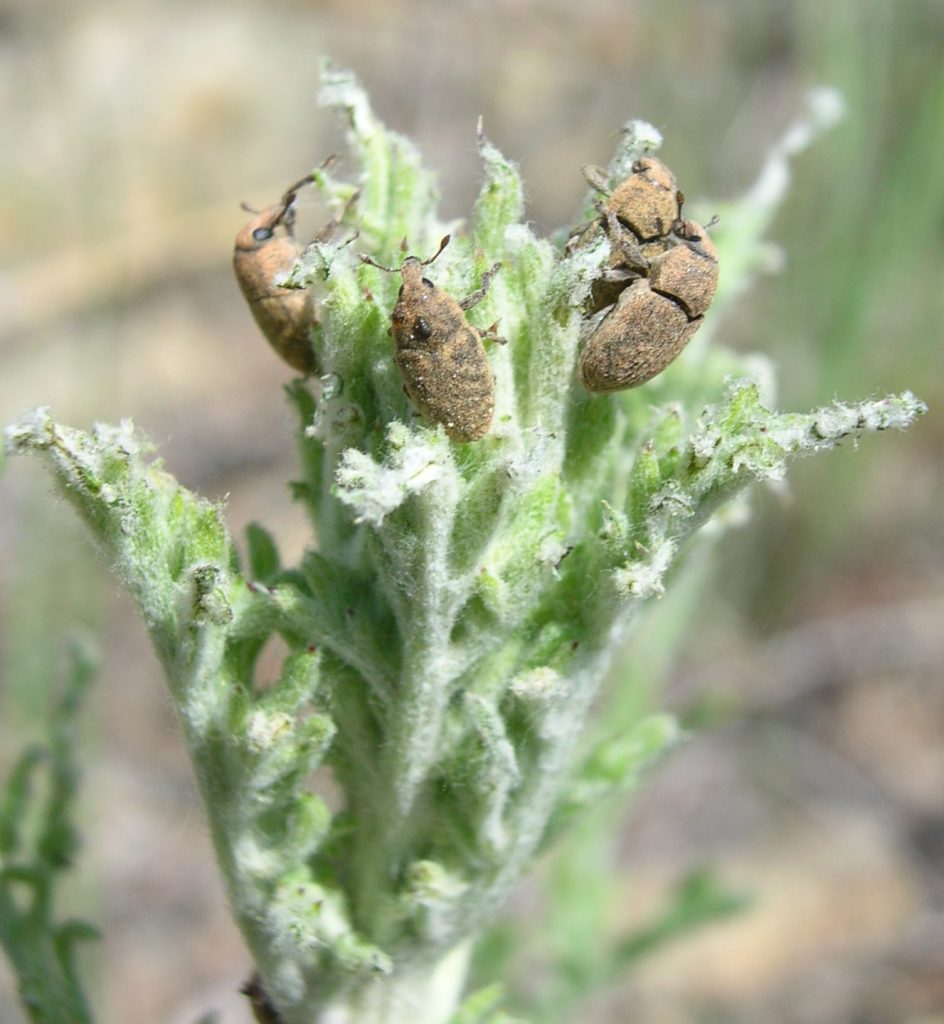
Small grey-brown weevil. Adults feed on leaves, rosettes and bolting stems. Larvae feed exclusively on seeds leaving a hollowed-out seedhead.

Cyphocleonus achatesCyphocleonus achates
Bioagent: Cyphocleonus achates

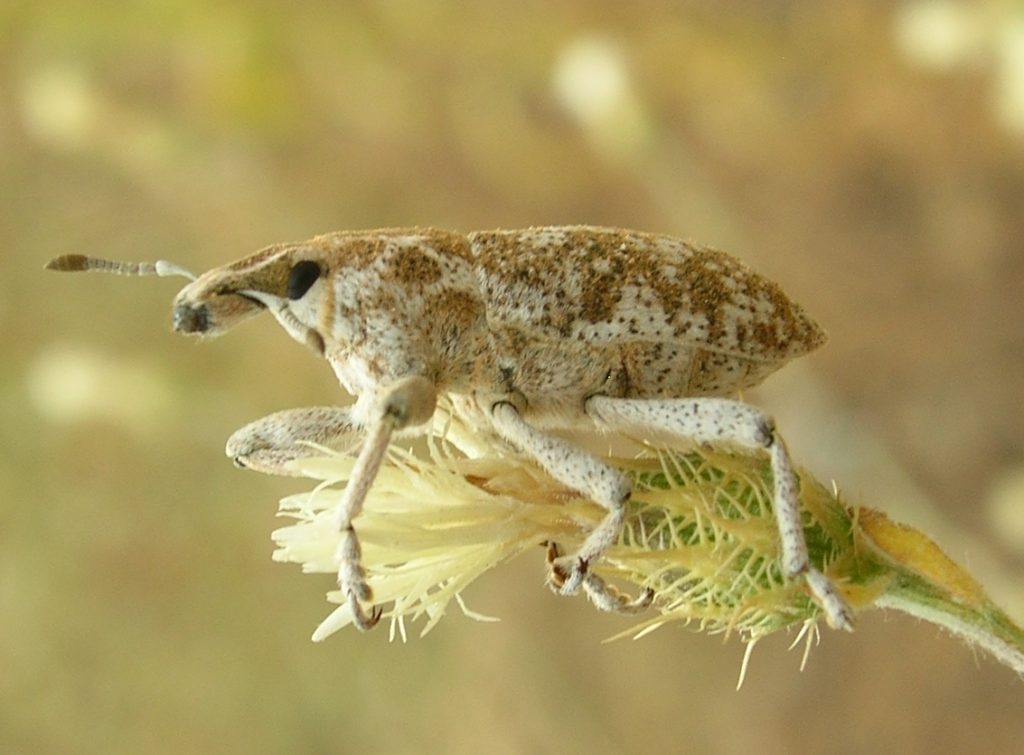
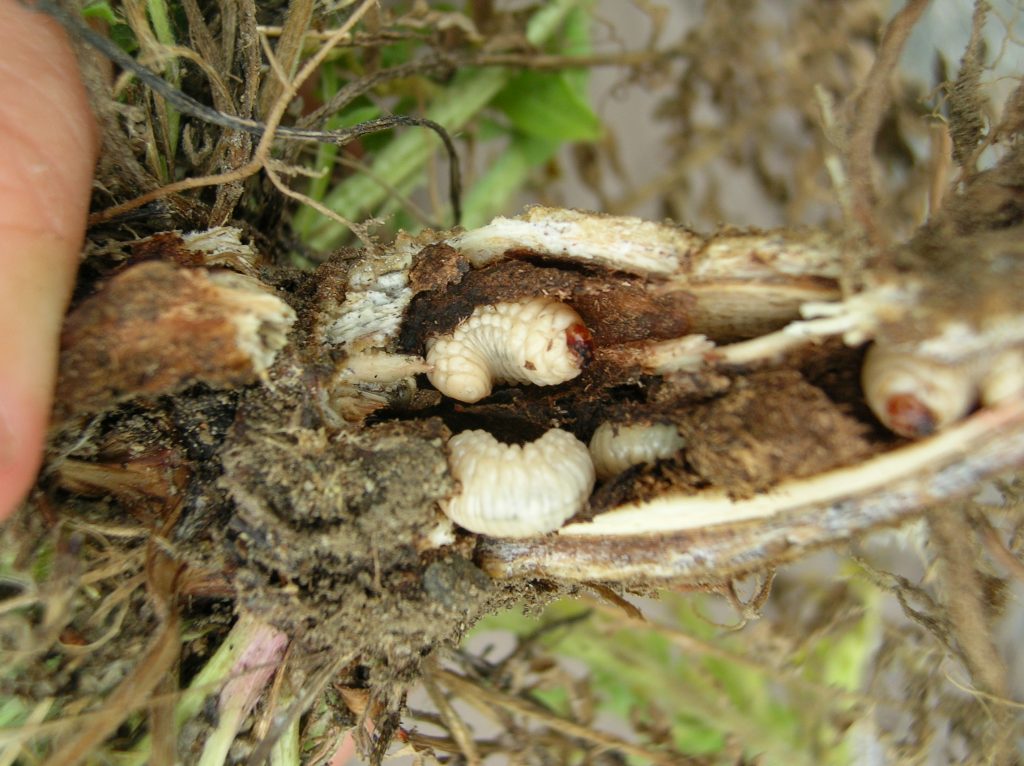
Large grey-brown weevil. Adults feed on leaves and stems. Larvae bore into the taproots and destroy vascular tissue. Heavy feeding causes gall-like swellings on the root.

Sphenoptera jugoslavicaSphenoptera jugoslavica
Bioagent: Sphenoptera jugoslavica

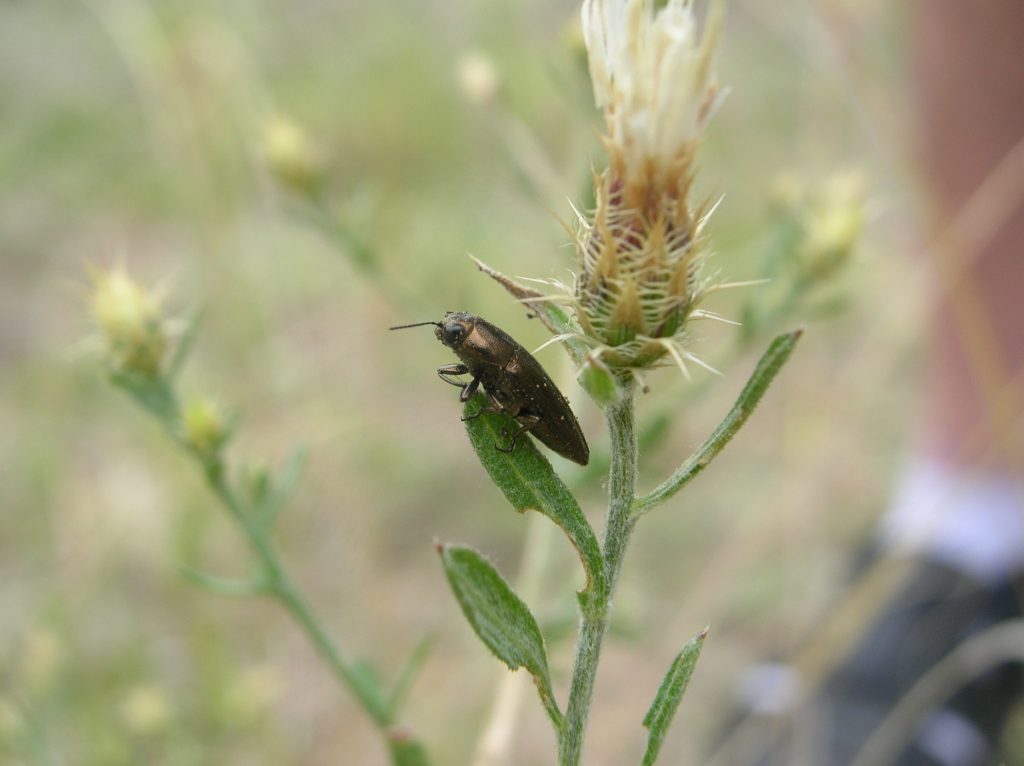
Small metallic copper to black beetle with a long body. Adults feed on the foliage and eggs are laid on the rosette leaves. Larvae mine into upper root, causing the root to swell.

Species Profile

Hound's-Tongue Learn more

Hound's-Tongue

Mogulones cruciferMogulones cruciferMogulones crucifer
Bioagent: Mogulones crucifer

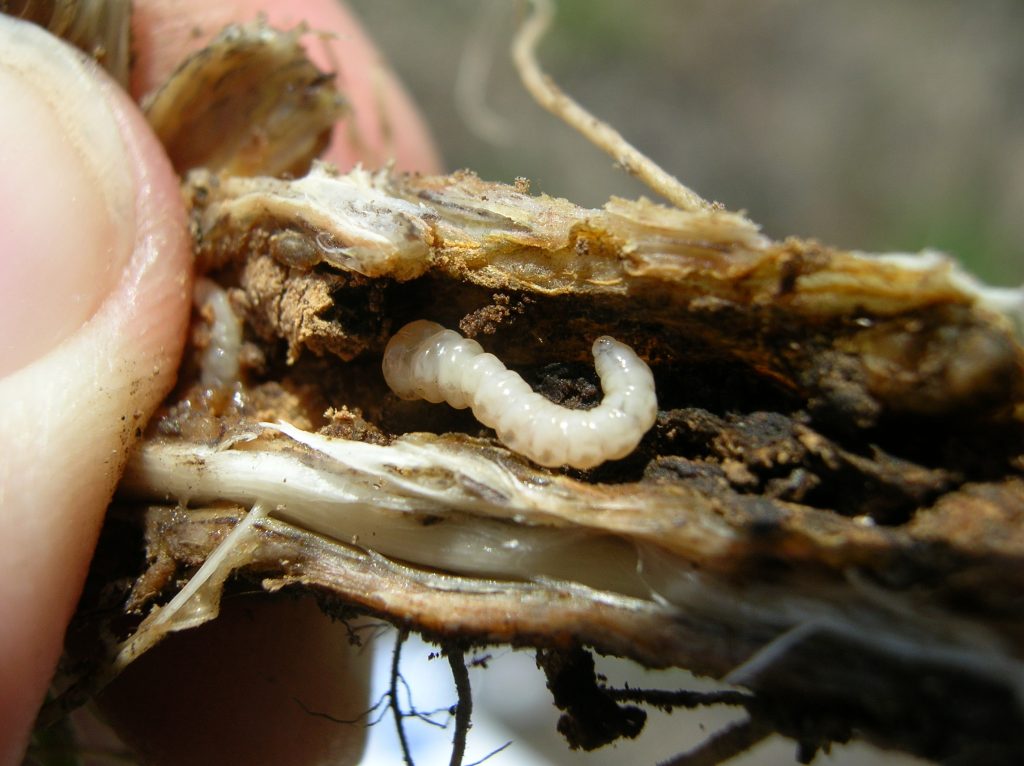
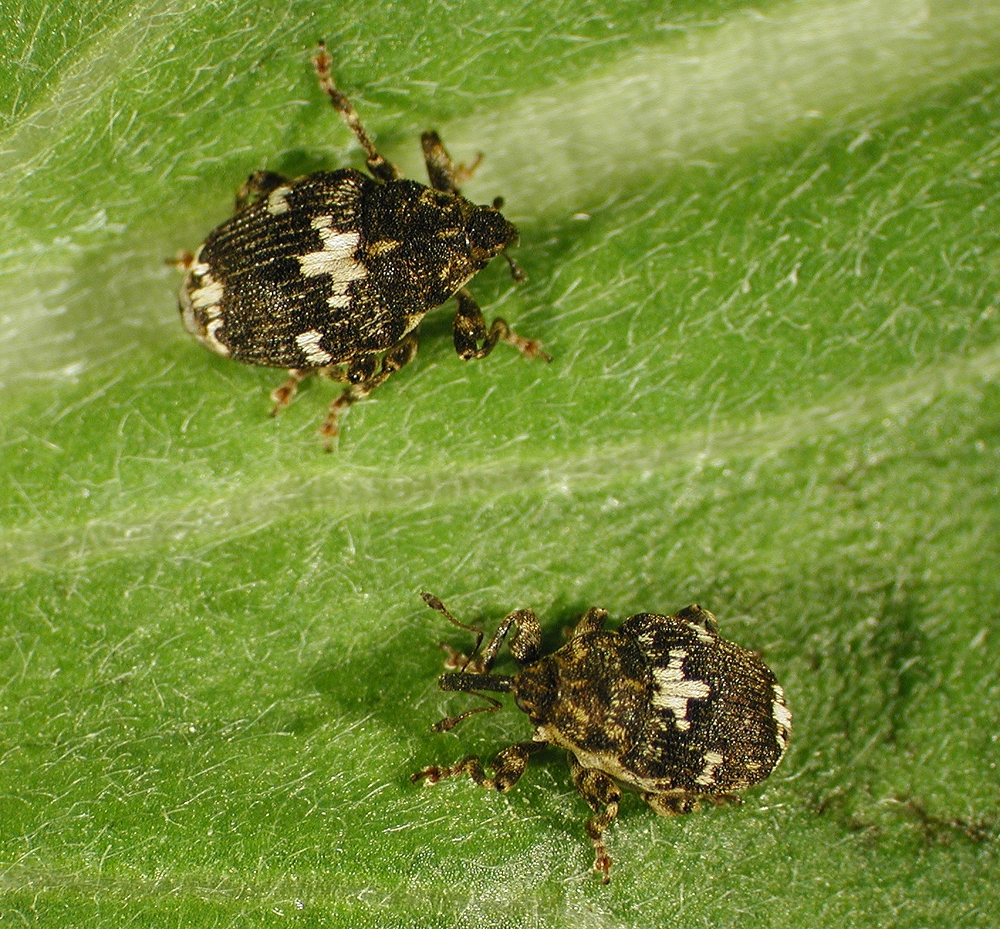
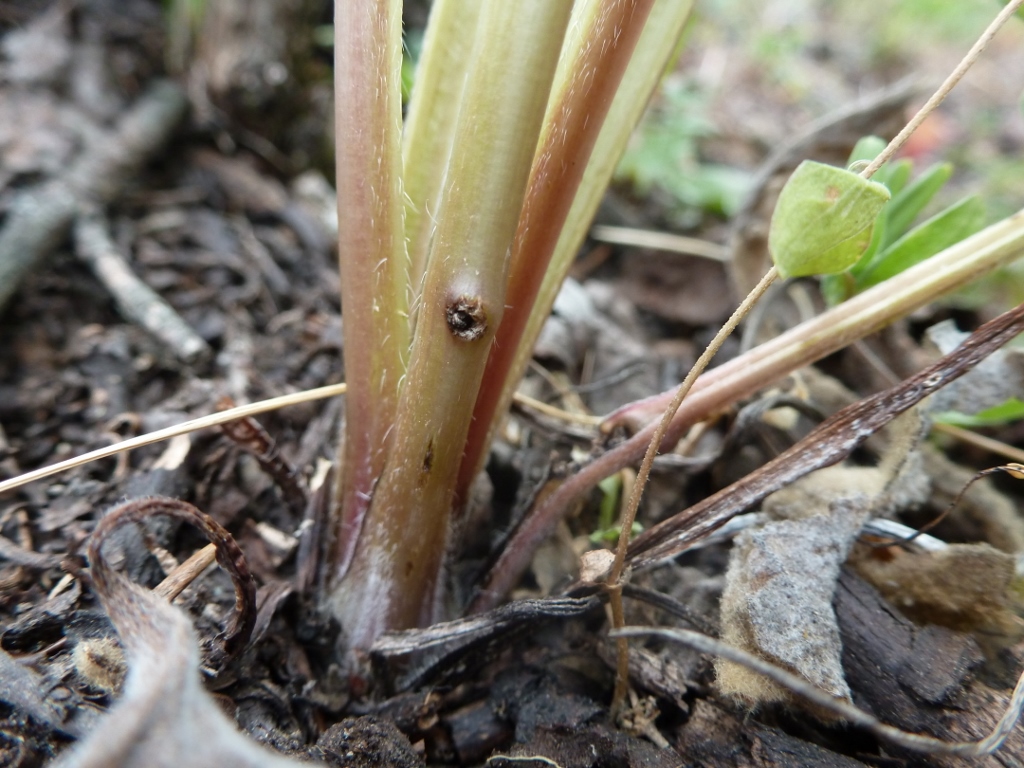
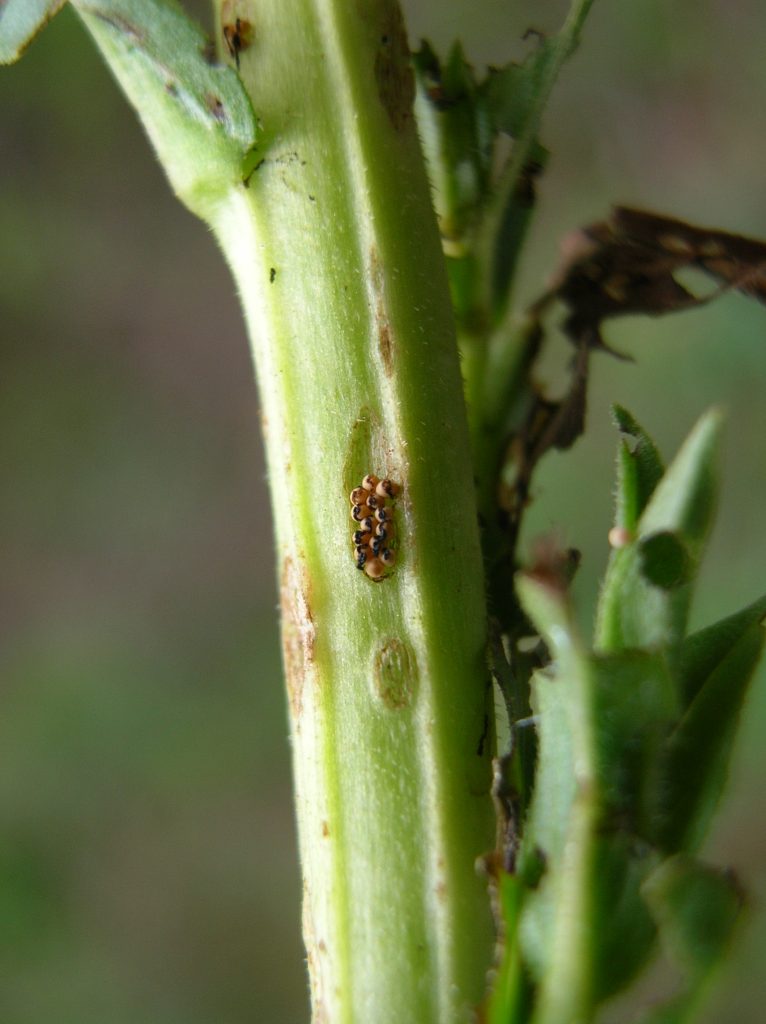
Blackish-brown weevil with white cross on back. Adults chew distinct oval holes in the leaves and stems. Eggs are laid in the stems, creating blister-like bumps along the smooth stem surface. Larvae bore into the roots and cause heavy feeding damage.

Species Profile

Purple Loosestrife Learn more

Purple Loosestrife

Galerucella spp.Galerucella spp.Galerucella spp.
Bioagent: Galerucella spp.

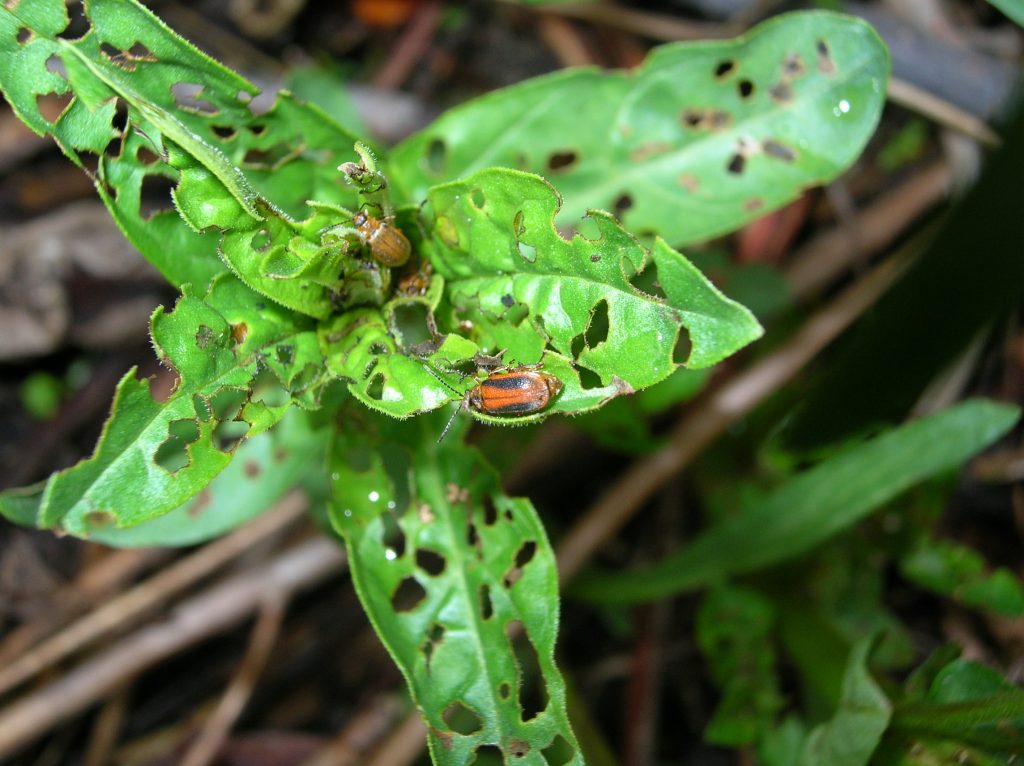
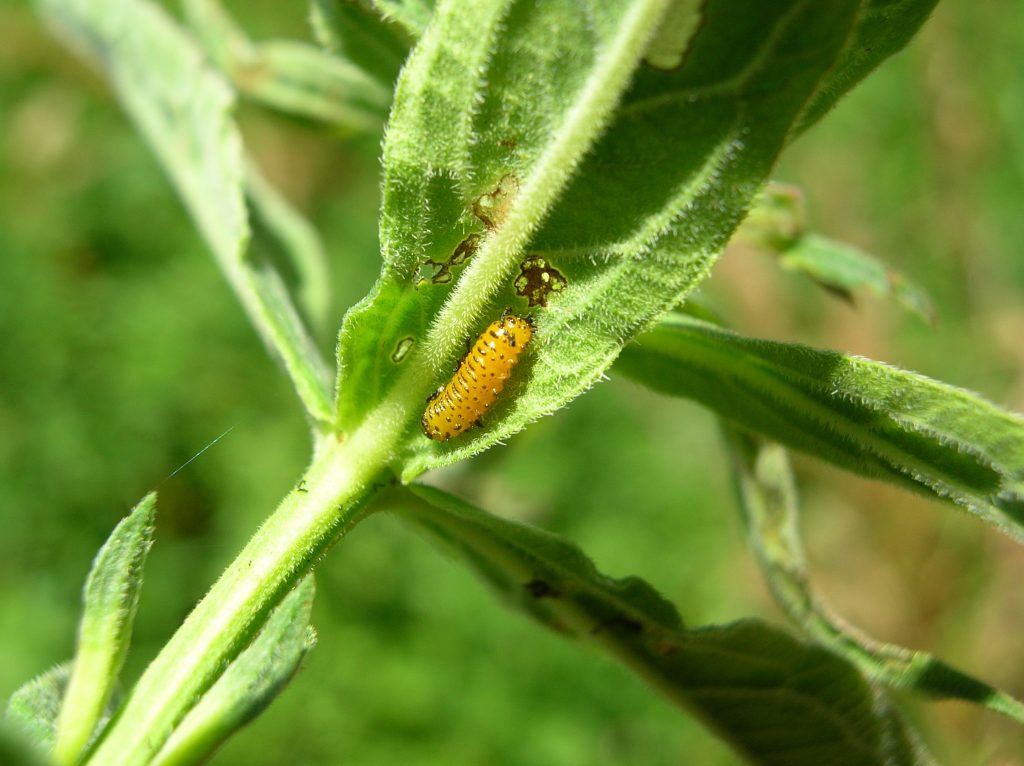
Orange-brown or brown beetle with distinct dark lateral lines. Adults chew large chunks out of leaves. Yellow larvae feed on flower buds and foliage, leaving transparent “window panes”.

Species Profile

Canada Thistle Learn more

Canada Thistle

Larinus carlinae (previously L. planus)Larinus carlinae (previously L. planus)Larinus carlinae (previously L. planus)
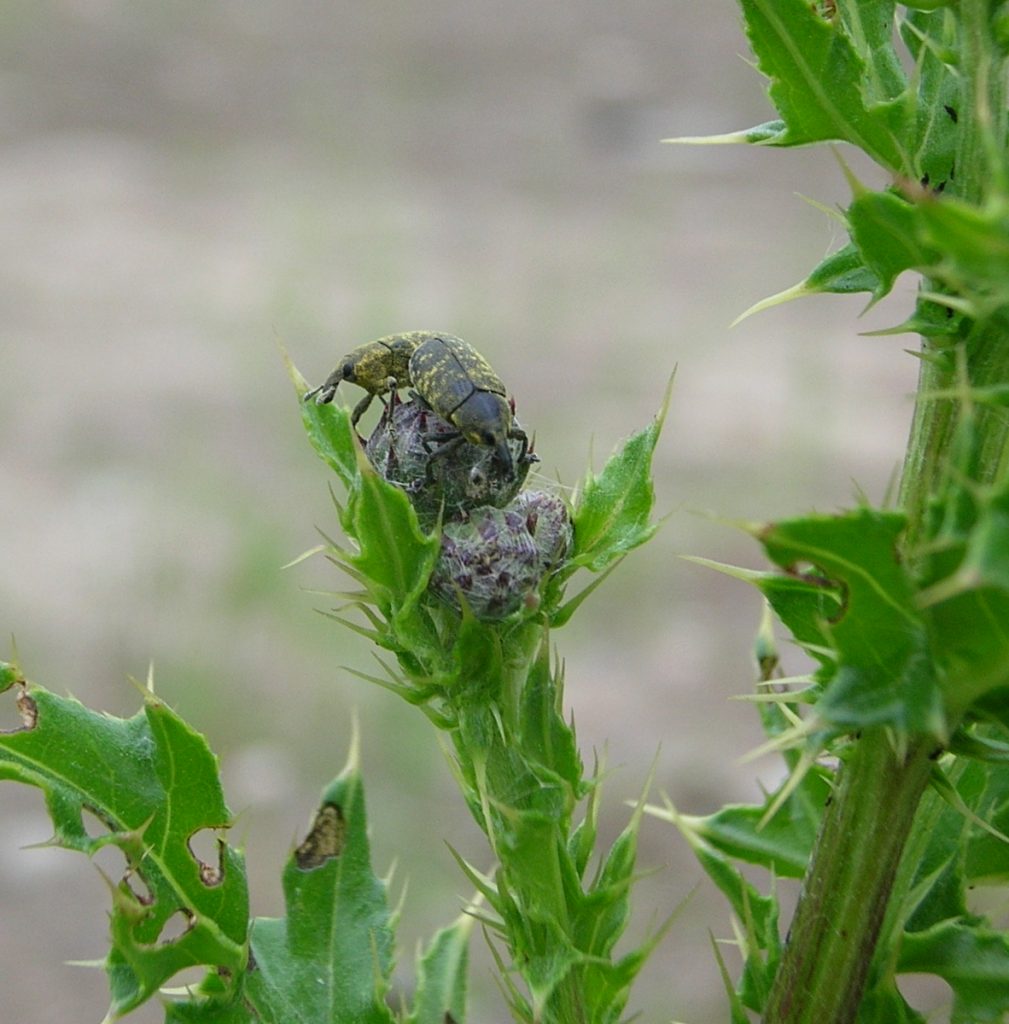
Bioagent: Larinus carlinae (previously L. planus)

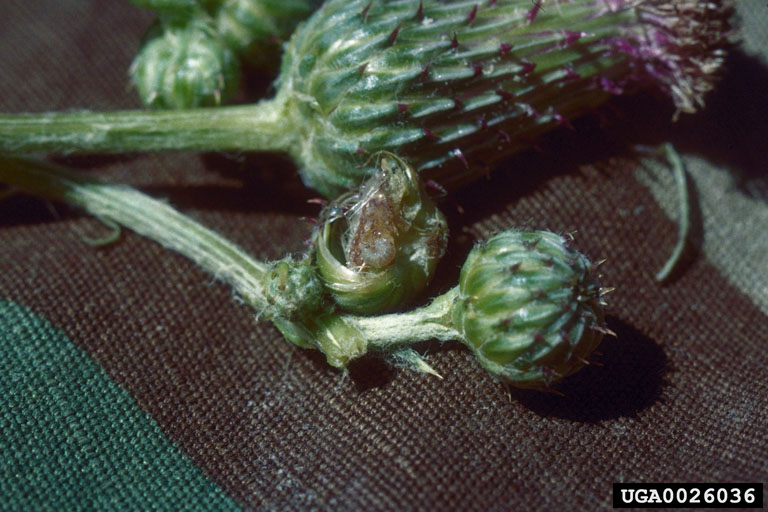
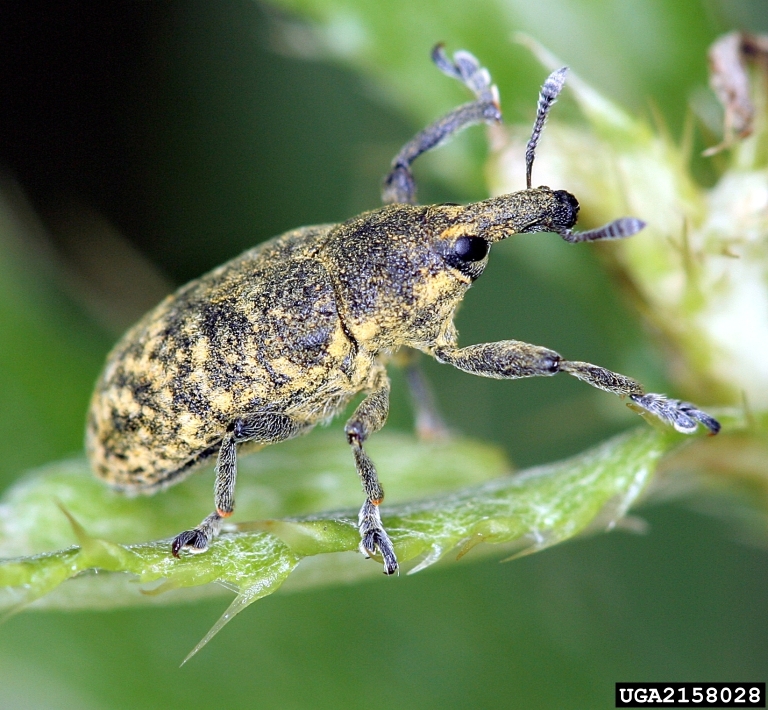
Black and mottled yellow weevil. Eggs are laid in flower heads and larvae feed on the buds, reducing seed production. Center image credit: Eric Coombs, Oregon Department of Agriculture, Bugwood.org. Right image credit: David Cappaert, Bugwood.org

Species Profile

St. John's Wort Learn more

St. John's Wort

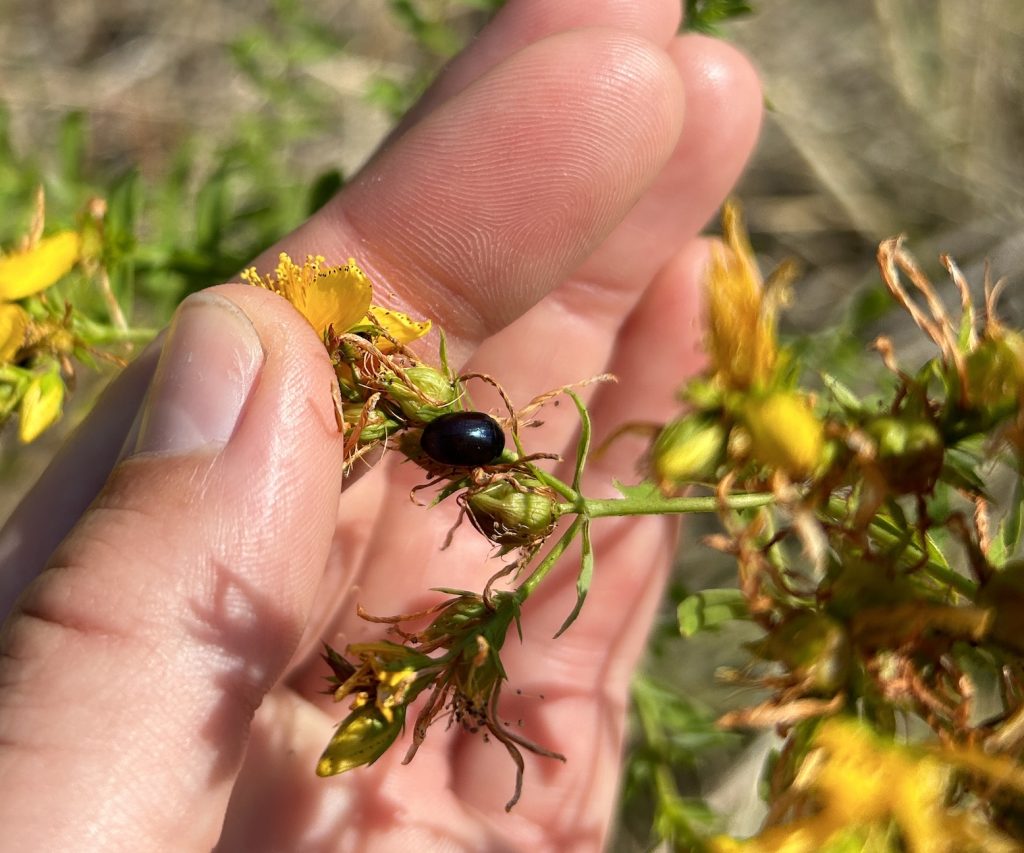
Chrysolina hypericiChrysolina hypericiChrysolina hyperici
Bioagent: Chrysolina hyperici

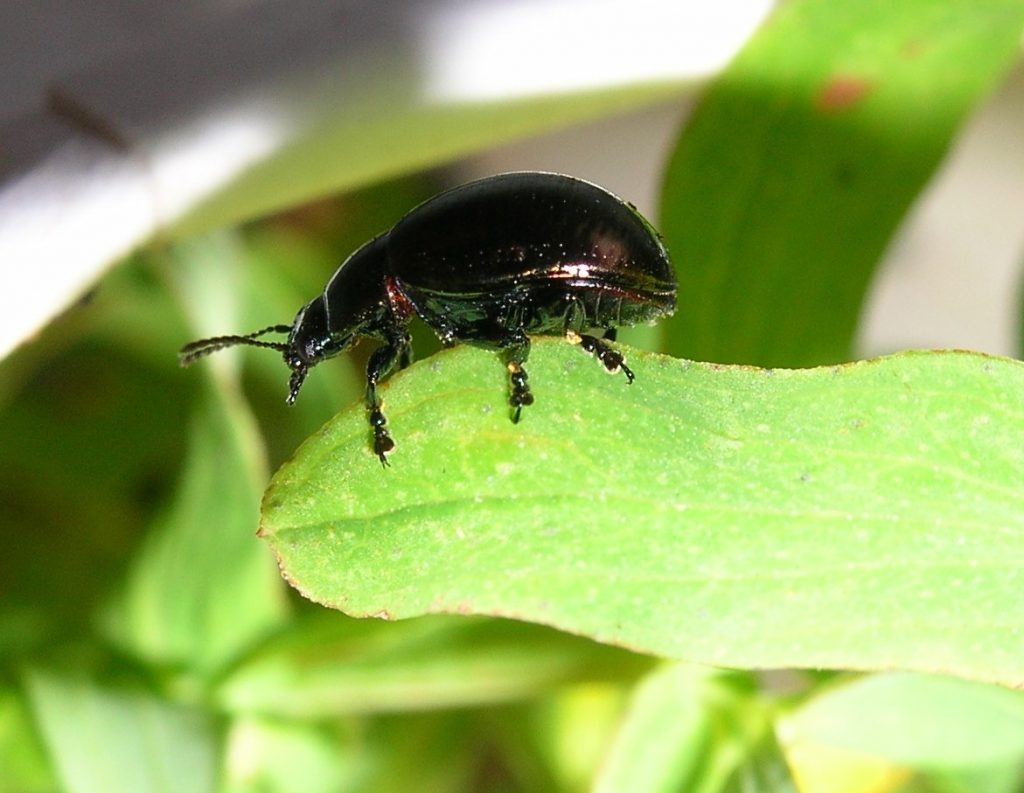
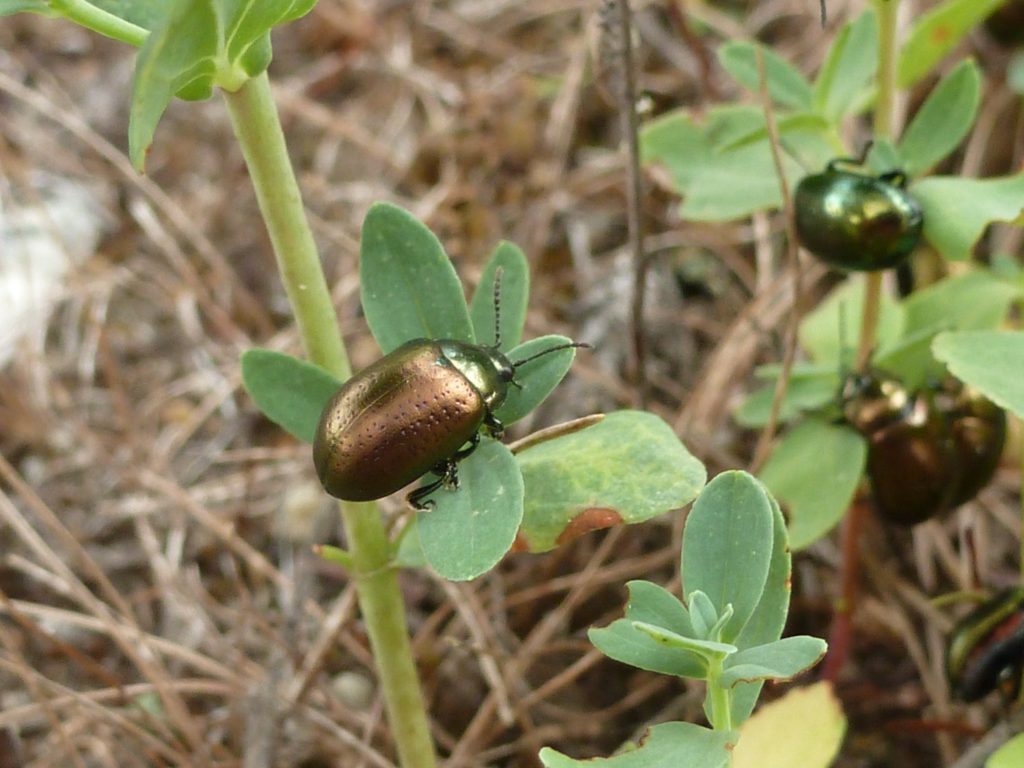
Metallic bronze-blue, green or purple beetle. Adults feed on flower buds and leaves. Larvae feed on shoot tips.

Species Profile

Tansy Ragwort Learn more

Tansy Ragwort

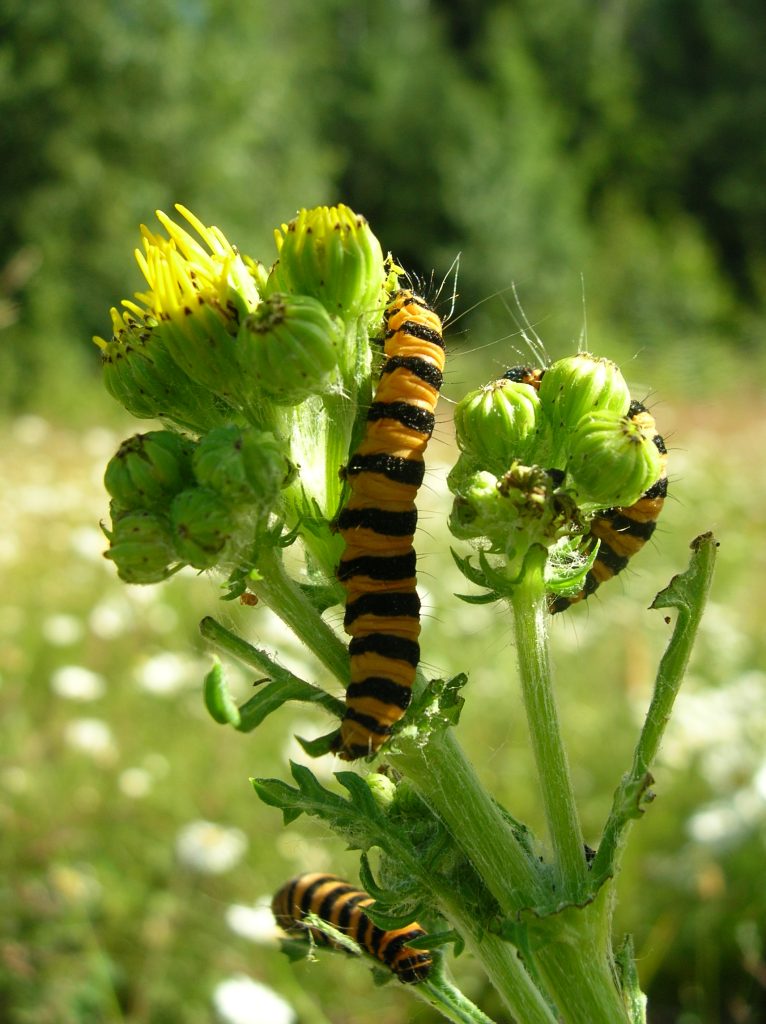
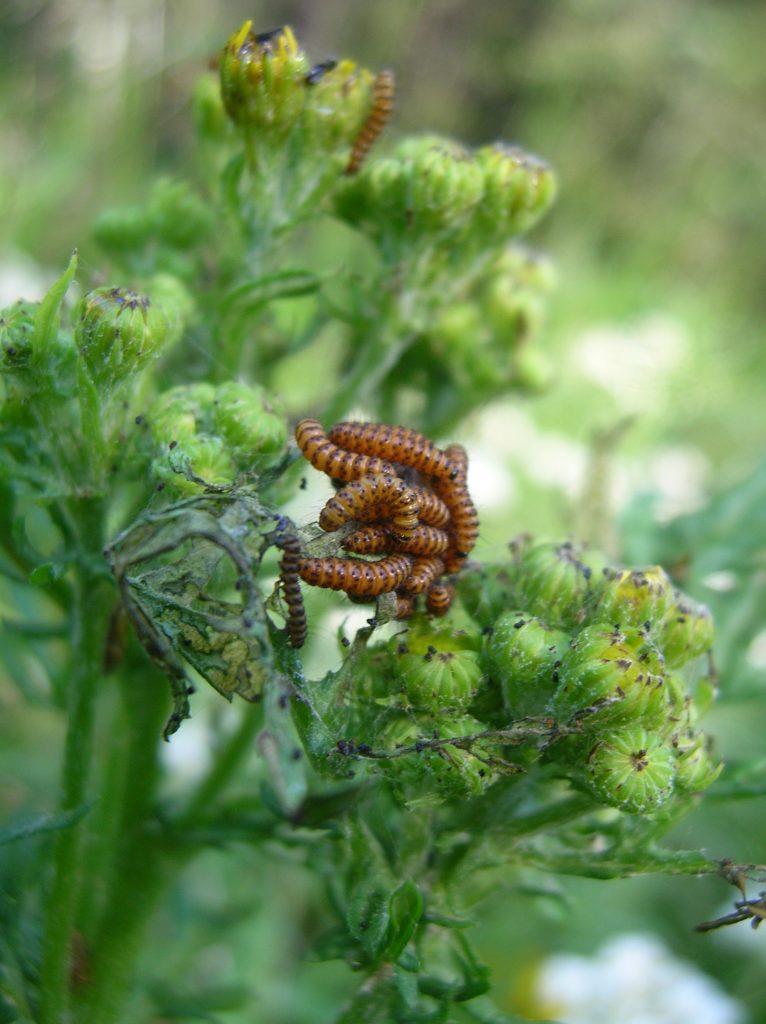
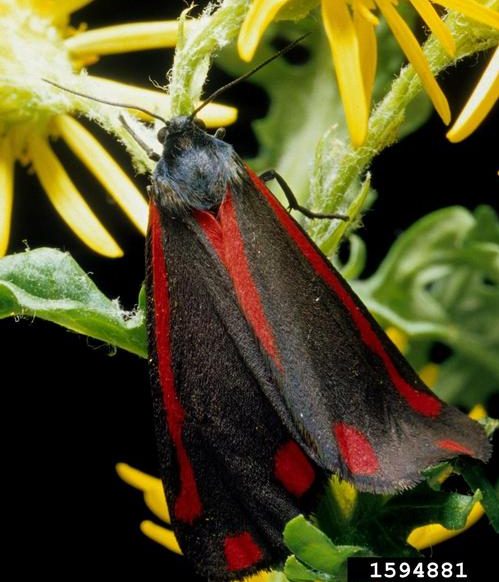
Tyria jacobaeaeTyria jacobaeaeTyria jacobaeae
Bioagent: Tyria jacobaeae

Bright red and brown/black moths. Adults do not feed on the plant but will lay eggs on the underside of rosette leaves. Larvae start grey-green and eventually become black with ringed orange-gold bands. Larvae will feed heavily on the foliage, stems and flowers. Right image credit: Mark Schwarzlander, University of Idaho, Bugwood.org

Longitarsus jacobaeaeLongitarsus jacobaeae
Bioagent: Longitarsus jacobaeae

Golden to dark-brown flea beetles. Adults feed on foliage and deposit eggs near the root crown. Larvae feed on foliage and roots.

Species Profile


Promising Biocontrol Currently Undergoing Screening
*NOT available in B.C.*


There are multiple biological control agents undergoing research and screening for some high priority invasive plants in the region. This includes tree of heaven, Russian olive, Himalayan balsam and hoary cress.
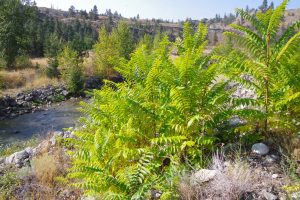
Tree of heaven

Click HERE to download biocontrol factsheet

To request bioagents or a property assessment contact:
info@oasiss.ca
Find a complete list of current bioagents in B.C. by clicking here.